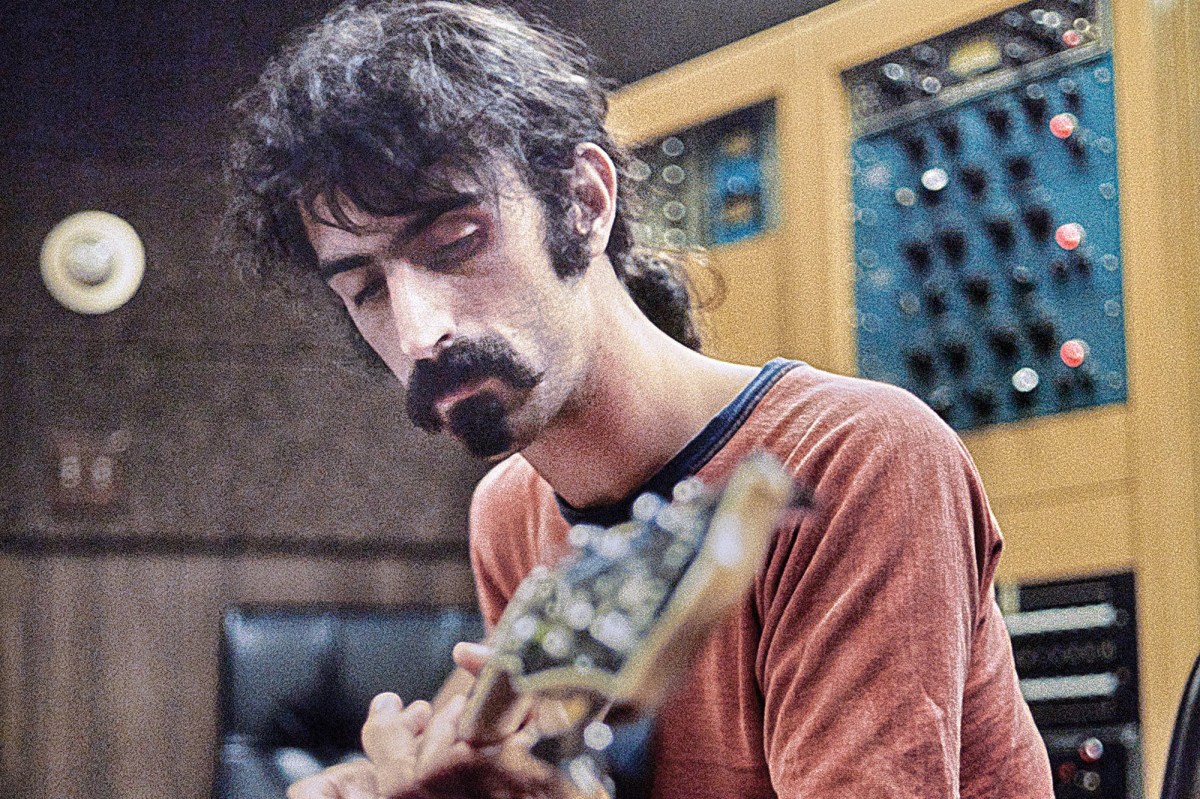
Overview:
Frank disbanded the original Mothers of Invention in August 1969, abruptly ending the first major success of his career. The clearest option for a future musical direction was of course rooted in his then upcoming solo album Hot Rats. So FZ played a handful of shows in California with the spirit of Hot Rats, but in this same period he also used his newly acquired free time to sit in with a number of bands as a guest guitarist. Partly just for the fun of playing with new musicians, and partly with an eye on picking up new members for potential future musical projects. Frank talked about this period of his career in Hit Parader in June 1971, which succinctly describes this unique transitional point in his career.
“I got interested in playing more guitar and that’s when I started playing with the Hot Rats group. I wanted not just to play more guitar but play it in the context of a stronger rhythmic feeling. Because if there was one weak point in the old Mothers it was the rhythm section. It was too static. In order to synchronize both drummers they had to be limited in the type of things they could play. So the beat stayed pretty monotonous. I heard Aynsley (Dunbar) play at this pop festival in Belgium and I really liked the way he played. So I brought him to the United States, in the first place to make a successor to the ‘Hot Rats’ album which was what ‘Chunga’s Revenge’ turned out to be. And somewhere along the line all these other plans started popping up.”
Hot Rats was recorded during the summer of 1969 and released on October 10th of the same year, so it was fresh on Frank’s mind when he ended the Mothers. He utilized professional session musicians (along with then-current Mother Ian Underwood) for the recording of the legendary album, and he quickly found that he preferred working with these musicians. They required less effort to play his complex compositions, and they provided a more dynamic backing to his improvisations (as displayed on 2019’s fantastic archival release: The Hot Rats Sessions). The final Mothers shows from the summer of ‘69 do have a Hot Rats vibe to them, but it’s mixed in with strange electronic chamber music pieces, crazed free improvisations, throwback R’n’B numbers and other classic MOI buffoonery. While the original Mothers have an undeniable character and charm to them, it’s also undeniable that the Black-Tripp-Estrada rhythm section was as stiff as a board. Frank simply wanted to play guitar with musicians better than the strange advanced, mechanized bar band that were the Mothers of Invention, and after disbanding the Mothers he quickly began to play some Hot Rats-esque shows with Hot Rats-esque bands.
Frank’s attempt at a Hot Rats group of course started with the musicians on the Hot Rats album. Ian Underwood was the only Mother on this Zappa solo project, and is nearly an omnipresent force on the record, providing all keyboards and woodwinds. Max Bennett is the closest thing to a constant after Ian, appearing in all but the earliest reported shows from this era. He joins the group as a consistent member around January 1970, but before he re-enters the fold, future Mother Jeff Simmons played bass in a four-piece group featuring FZ, Ian, and former Mother Art Tripp in November ‘69, which is the first known Zappa show after the breakup of the Mothers (there are sadly no recordings of this lineup). Frank produced Jeff’s album Lucille Has Messed My Mind Up around this time, which is likely why Frank opted to work with him, but Art and Jeff did not get along (to put it lightly) so this was not a long lasting teenage combo. Shortly after this Tripp quit Zappa for good to work with fellow weirdo Captain Beefheart, and in late ‘69 though early ‘70 the group played with a variety of short-term/one-gig drummers including Ed Greene, and potentially Paul Humphrey. This is until Frank finally found his permanent drummer with the fantastic Aynsley Dunbar. He first met Aynsley at the Amougies festival in Belgium in October 1969, and reached out to him sometime in the next couple of months after the festival. Aynsey said no at first but after some thinking he eventually agreed to become Frank’s permanent drummer and began playing with FZ around February/March 1970. Don “Sugarcane” Harris also contributed violin and vocals to some 1970 shows, but is unfortunately absent from others. Finally, Frank occasionally played with his old friend Captain Beefheart during this period, but there are sadly no available recordings of any of these gigs. [We do have audio of Frank guesting with Beefheart and the Trout Mask-era Magic Band at the Amougies festival in Belgium though, which is extremely fun.] After Aynsley joined the band there was a pretty consistent line up of FZ, Ian Underwood, Don “Sugarcane” Harris, Max Bennett, and the aforementioned Dunbar. This line up recorded in the studio in early March 1970, and has the most rightful claim to the “Hot Rats Band” name in my opinion.
This loose group of musicians was most frequently referred to as “Frank Zappa and The Hot Rats”. The names “Frank Zappa & Friends” and “Chunga” also pop up in this period (see the individual entries for more detail on which groups went by what name). Frank never fully toured with any of these bands, but he did play a handful of gigs in California, and fortunately there are recordings of two of them. We have one show from February 1970 from San Diego featuring a four-piece band consisting of Frank, Ian, Max and Ed Greene, and another show in LA one month later with Frank, Ian, Max, Aynsley Dunbar and “Sugarcane” Harris. There’s a notable change in style between these shows and the original MOI. Gone are the strange avant-garde improvisations and chamber music. There’s no screaming, no gas masks and no plastic baby dolls, just fantastic jazz rock jamming. The earlier gig is totally instrumental, while the later show is largely instrumental with a couple of vocal tunes courtesy of Mr. Harris. We have a very limited sample set, but they played a few instrumental MOI holdovers (King Kong and Pound For A Brown/Sleeping In A Jar), a few Hot Rats era tunes (like Willie The Pimp and Directly From My Heart To You), and a few songs from the then current studio sessions for a follow up to Hot Rats (Chunga’s Revenge, Sharleena and Twinkle Tits). There were of course some full blown improvisations too, like the little blues jam that opens the San Diego gig. Joe Travers has only been able to find a single show from this era in the vault: the February San Diego show which we luckily have an audience tape of. Unfortunately though, Joe has said this performance is underhearsed and sloppy, and he’s not wrong. Maybe we’ll see an official release of part of this gig someday, but in the meantime we have these enjoyable two audience recordings.
I do think Frank would have liked the Hot Rats band to be his next big musical project, but unfortunately the non-Underwood musicians on Hot Rats couldn’t work out long term for a variety of reasons. Max Bennett was too successful as a session musician to tour, plus the music eventually got too “avant-garde for [his] tastes”. None of the session drummers on Hot Rats (with the possible exception of Paul Humphrey) ever played with Frank live, probably for the same reasons as Max Bennett. And the fantastic Don “Sugarcane” Harris unfortunately struggled with drug addiction, and was just too unreliable to join FZ’s band and tour full time (Frank reportedly bailed him out of jail to play on Hot Rats, but I’ve struggled to find a source on this so take it with a grain of salt). Despite the potential hope that this project could go farther, Frank was still Frank and needed to tend to his wide variety of musical interests.
Even while performing with the various Hot Rats Bands, FZ was still working on forming a new permanent band, potentially even a new Mothers of Invention. With a brief freedom from touring and leading a group, Frank was able to jam with a number of bands during this era, most notably at the Actuel music festival he “hosted” in October 1969 in Amougies, Belgium. These guest appearances led to Frank’s first time playing with future collaborators Aynsley Dunbar, Jean-Luc Ponty and George Duke, as well as his famous guest appearance with Pink Floyd, among many others. Not all of these guest appearances are as important to his career as others, and not all of them are musically incredible, but they’re all very interesting from a historical perspective (in the words of Marge Simpson: “I just think they’re neat”). We only really have one, maybe two documents of these guest appearances. Seven of his eight guest performances from the Amougies festival are now available to us in some form or another, and we also have Frank’s festival appearance with Jean-Luc Ponty in July 1970, though it’s arguable whether this should be included in this section since it’s after Frank formed the new Mothers (I’ve put it here largely for ease of organization).
Whatever Frank’s ideas for his next long term touring project were, he did originally plan to get another Hot Rats type album out, which is why he did a week of session work in March 1970 with the Dunbar-Bennett-Underwood-Harris Band. He played around with Hot Rats stuff for another few weeks after this, but his focus eventually shifted back to his classical works starting around April. This quickly led to the world premier of 200 Motels at the “Contempo ‘70” in LA in May 1970, which would feature a “reunited” Mothers of Invention. I’m not sure what Frank planned to do after this, though I’m not sure Frank knew what he wanted to do either. He actually had the June 1970 festival gig in Bath, England already booked, but wasn’t sure what kind of band he would bring. Well history would be decided when Mark Volman and Howard Kaylan of the recently disbanded Turtles approached FZ after the show and Frank asked the duo to join his group. This of course directly leads to the “New” Mothers of Invention in June, and sets into motion the next major phase of Frank-dom. You could argue that the Hot Rats era ended with the Mothers reunion shows, but I think Frank really thought of that as a means to an end to get some “serious” music performed. I believe getting the opportunity to work with the former Turtles is what actually brought this era to a sudden end. What better evidence is there for this claim than the fact that as soon as his time with the Turtles is forced to a close in December 1971, he immediately returns to jazz with Waka Jawaka and The Grand Wazoo? If the Turtles didn’t come into his life I suspect he would have continued with more Hot Rats material right away.
Though Frank did leave a lot of this material behind, he never did forget Hot Rats completely. There’s obviously 1972’s big band projects, but before then look at the fantastically jammy King Kongs and Pound for a Browns from 1970 and 1971, and even 1979’s Sleep Dirt, which was at one point titled Hot Rats III. A small chunk of the March 1970 studio recordings would wind up on Chunga’s Revenge, but they were heavily edited down and mixed in with a number of vocal tunes featuring the “New” MOI. Thankfully, in 2023 we finally got a box set dedicated to these “Hot Rats II” sessions, delightfully titled Funky Nothingness. This is the best look into this mysterious era that Zappa fans could possibly hope for, showing us how much material Zappa left unreleased from this inter-band period. It’s a fantastic, unique document, and it shows us that the live performances from this era are just as “Funky Nothingness” as they are Hot Rats. Based on the available unofficial recordings and the recent archival releases, this era just might be the most relaxed time in Frank’s entire career. No stable band, no concrete idea of what to do next, just the goal to play more music. Many of Frank’s shows and guest appearances from this interesting era have been lost to time [I’ve dedicated a section below to what we know about the missing gigs], so there will always be a lot of unknowns surrounding these shows. But one thing I do know is that every second of the two shows we have are filled with intense, awe inspiring jamming and anyone who is a fan of Hot Rats should do themselves a favor and check them out.
The Band (On The Available Recordings):
Frank Zappa – Guitar, Vocals, Chunga
Ian Underwood – Alto Sax, Keyboards, Staying Power
Max Bennett – Bass, Gumbo
Don “Sugarcane” Harris – Violin, Vocals, Organ, Tears For Sharleena (LA Only)
Aynsley Dunbar – Drums, Connection (LA Only)
Ed Greene – Drums, Confusion (San Diego Only)
Recordings Available [Full YouTube Playlist Available Here]:
1970 02 08 – Sports Arena, San Diego, CA (Audience B-/C+)
Our first (of two) available hot rats shows is this quartet gig from San Diego. This is one of very, very few recordings of Frank playing in a quartet, and certainly the only long-form one (as of March 2026). The band for this particular night features former (and future) Mother Ian Underwood on sax and keys, Hot Rats sessions alum Max Bennett on bass, and session musician (and future Barry White collaborator) Ed Greene on drums. This is a pretty lively, entertaining and jammy show, but it’s unfortunately on a pretty cruddy recording. It’s boomy and occasionally distorted, but definitely listenable if you have bootleg ears. This is also the only known performance of this specific line-up, and is possibly the only time FZ ever played with Ed Greene. This is a rare all instrumental Zappa concert, and boy is it a treat. This band is pretty under-rehearsed, and the composed sections don’t always sound too swift, but the improvisations are a consistent highlight. Our recording begins during the emcee’s introduction, and features Frank giving an amusing intro where he announces that they’re not done setting the mics up, but that they’re going to start anyway.
Emcee: ….would you please, let’s make a big hand and everything for Frank Zappa and The Hot Rats”
FZ: “Thank you, now listen, here’s the deal. They’re still setting up the microphones but we’re gonna start playing anyway, and we’re gonna waste our time with some sort of basically worthless but fun-to-warm-up-with blues shuffle in the key of C. To give you an idea of how to, uh, to make the basic comprehension of what we do. There’s no vocals, all we do is play music, and if you like it you can tap your feet to it, if you don’t like it, well, um, you can leave I guess. [someone must show Frank something] Very handsome, this is some sort of San Diego designed bowling ball.”
I love Frank’s intro to this show. I think about “There’s no vocals, all we do is play music” every so often, and I have no idea what the “San Diego designed bowling ball” consists of. The night begins with a “basically worthless but fun-to-warm-up-with blues shuffle in the key of C”. Ed and Max lay down a nice bluesy groove, and Ian plays some quick chords before Frank whips out an excellent, very late 60s, Hot Rats-y kinda solo. Fast and bluesy with a dripping wet tone. Ian plays a nice, bouncy keyboard solo once FZ wraps up (I don’t believe he really played any keyboard solo with the original Mothers, but I could be wrong), and Frank comes back in once Ian finishes with more fiery guitar. After another minute or so of guitar fury we get a 60 second bass solo. It’s probably pretty nice, but it’s just barely audible on this recording. Overall this is a fun, inoffensive, occasionally fiery blues jam that reminds me of the blues jams that will pop up in 1974 at times (which is a high compliment). Frank cues King Kong directly out of Max’s solo, and the show begins for real.
We get a short, bare bones version of the jungle-y theme, with the melody entirely on Ian’s piano. It’s just the main theme too, though FZ hints at the new third theme as he begins another killer guitar solo. This is the first performance we have of this tune of this tune without the original MOI, and the beat is just so much freer, allowing Frank to really stretch out and get creative. Though the recording quality of the rhythm section is particularly bad, FZ’s guitar comes through fairly clearly, and boy is he on fire tonight. When he wraps up we get a lively keyboard solo from Ian that carries Frank’s energy for a few minutes, before heavily slowing down and switching to a totally different beat around six minutes in. Ian plays a jazzy rendition of the main theme after this, and continues to solo over this different rhythm. The band pretty quickly picks the pace back up, and Ian just keeps going while Frank supports him with some very nice rhythm guitar (which he keeps up for the remainder of the jam). He comes to a pretty hot conclusion, and hands things off to Max for another nearly inaudible bass solo. It’s cool to hear FZ and Ed kinda jam out during this, but it would be more enjoyable if Max was clearer. He only plays for a minute or so, before Ian returns on the sax! He really gives it his all here, delivering a cool, sometimes screechy solo that feels like King Kong meets the Gumbo Variations. It’s nice to hear Ian stretch out over a more dynamic rhythm section, he’s been just as constricted by the MOI rhythm section as Frank had been. He really goes full freak mode in the back half of his sax solo, and as he wraps up FZ follows it with a full rendition of the third theme on guitar! He plays a second, shorter, but equally tasty solo and passes the baton to Ed for a quick, solid drum solo. This finally brings this epic jam to an end, and we get a terribly warbly and distorted take of the main theme to close off the first real tune of the night. This is just an absolutely monster King Kong performance, clocking in at just under 20 minutes, and shows what a step in the right direction disbanding the original Mothers was (Sorry Jimmy).
“We’re gonna play a piece now that doesn’t have a name. It’s a bolero, and it’s in the key of G, for those of you who like to be harmonically oriented….”
It doesn’t have a name yet, but the music is instantly recognizable: Chunga’s Revenge! This is an extremely early performance. There’s no guitar intro, so they start right off with the familiar riff over a slow kinda shuffle vamp, but the iconic baseline isn’t there yet. The theme of the tune is rough but present, and it almost seems like Frank is still working out the exact phrasing of the melody. This is probably the least confident performance of this tune we have, but Frank still manages to deliver an entertaining and engaging solo. He’s playing with that classic Hot Rats tone, and whips out a long, fantastic guitar jam. Chunga’s in this form almost feels related to Son of Mr. Green Genes, especially when Ian occasionally plays the repeating part of the main riff while FZ plays. Ian and Frank jam together for a little bit, before Ian takes over with a sick keyboard solo to conclude the Bolero. Though this is far from the strongest version of this tune, it’s still a great performance and it’s incredibly interesting to hear it in such an early and raw form. The sound quality of the recording unfortunately starts to get even worse near the end of the tune, though. It’s now even more warble-y and distant, but the best moments of the show are behind us so it’s a manageable loss.
As Ian’s jam ends and the band settles down, Frank cues A Pound For A Brown! It’s an extremely weird and shaky version though. It’s based on the 60s Mothers versions, but I feel like Max does not understand the bassline at all and is kinda just going for it. Ed sounds pretty lost too, but Ian plays the theme on keys and keeps the performance afloat. There’s no middle improv section, but Frank does take a nice guitar solo at the end to redeem the absolute mess of a theme. It’s only about two minutes long, and he sounds closer to his soloing with the MOI than anything on Hot Rats, but it’s still an enjoyable little jam. Just like in the good old days, Sleeping In A Jar directly follows. This version is also based on the 60s OG MOI version, and includes the same intro, but contains less of the mid-theme crazy conducted nonsense. FZ plays a short burst of guitar as the theme first ends, then again after the second theme. After his second solo-ette we get the live-only bridge from the 60s, and then a big conducted slow-down/melodic breakdown of the theme. Nothing like the nearly-comedic old versions really, just much jammier. Luckily though this version still heads right into a long jam just like with the old MOI. FZ whips out a great, heavy, biting solo lasting about two minutes, then passes it to Ian for another excellent alto sax solo. He honks his horn, quotes Chunga’s Revenge, and hands it over to Max for a bass solo, but unfortunately the recording cuts out here, and never comes back in.
It’s a monumental bummer that this tape from such a rare group ends so abruptly. I imagine that this jam had at least one more crazy FZ solo, but we may never know. Joe has confirmed on Discord that the show is in the vault, but that it’s too underrehearsed and sloppy to release in full (which I can’t really argue with). He’s also confirmed that this was a short show, so we’re probably not missing more than 15 minutes of music (though this is 15 minutes I would really like to hear). Overall though, I find this to be a really great, unique FZ show, and it’s one I would return to a lot if not for the ugly tape quality. We get fantastic improvised performances from a one-night-only group, but the shaky composed sections and near-abysmal sound quality do hurt the listening experience. I’d say it’s a must hear for die-hard fans, but any casuals should probably avoid it (unlike the following show, which should be heard by all FZ fans).
1970 03 07 – Olympic Auditorium, Los Angeles, CA (Audience A-)
The latter Hot Rats band tape comes a month after the former, and features a better, more defined lineup and setlist. We still have Ian and Max from the previous show, but violinist extraordinaire Don “Sugarcane” Harris of Gumbo Variations fame is here, and Frank has finally found his new drummer with the amazing Aynsley Dunbar. This is the first live recording we have of Aynsley as FZ’s official drummer (they first played together at the Amougies festival in October 1969), and this is the only recording we have of Frank playing live with “Sugarcane” Harris. This band is really killer. Aynsley perfectly compliments the music and Don adds a whole ‘nother level of R‘n’B beauty to it all. The setlist is great too, featuring a number of wonderful but rarely played FZ instrumental showcases. All these positive attributes are because this performance is smack dab in the middle of the Hot Rats II (AKA Funky Nothingness) recording sessions. There’s really only five songs played on this recording, three from the ongoing recording sessions, and two from the original Hot Rats sessions from July ‘69. All great picks, and to top it off the sound quality is just fantastic too. The vocals on the two lyrical numbers are a bit quiet, but that’s really the only thing you could seriously complain about. The instrumental material sounds crystal clear and the whole night is a wonderful listen full of fantastic, jazzy, funky playing. Anyway, let’s get on to the actual show, which starts with a quiet, understated, but very amusing intro from FZ. It’s a great example of Frank’s underground artist vibe in the 60s and early 70s, which I just adore.
“….And before we get started, I’d like to say that I’m really glad there’s some action like this in Los Angeles again, it’s been a long time. [Crowd Cheers] Los Angeles for a while has been the only major city in the United States that didn’t have a sort of community water hole. Now they’ve put it in a roller derby if you can imagine that. [More Cheers, Tuning] Hey listen, alright we gotta make sure the saxophone is working, just a minute. This is the first time that this group has played a concert, and uh I think we got a grand total of three, maybe five songs at the outside, but you’ll probably like them. I’d like to introduce somebody to you, this is Sugarcane Harris on violin. A few years ago, some of you people might remember at the El Monte Legion stadium there was…. Well, did you ever hear of Don and Dewey? This is Don. Monster in disguise… Strangely enough we’re gonna begin with a vocal, and the name of this song is I Would Be So Delighted, otherwise known as Sharleena”
The night begins with a fantastic performance of “I Have Been So Delighted, otherwise known as Sharleena”. The song is performed in its early jazzed-up arrangement, which is basically the same as on the versions released on the Lost Episodes (and much later on Funky Nothingness). This is the only known live performance of this arrangement, and it starts with the same booming, bouncy introduction as the studio take. Don and Frank sing the tune together, and their vocals are a bit low in the mix but it’s not a big deal. Additionally, Don comes in late a few times on both violin and vocals throughout the performance, but this isn’t a huge issue either. We get a nice performance of the head, with fiery guitar licks throughout, and when the theme ends we launch right into a tasty violin solo. Don absolutely slays, the rhythm section locks into a great groove and FZ provides lovely, crunchy rhythm guitar throughout. After a few minutes of violin, Frank comes in with an exciting, electric Hot Rats-style guitar solo. It doesn’t quite beat Don’s jam, but it’s still a real good time. The tune concludes with a (slightly choppy) instrumental verse, two “I would be so delighted” verses, and a great, jammy “send me baby home to me” ending with a little more FZ soloing. Overall this is just a fantastically funky, soulful time. A great start to the show that kind of ends up like a Gumbo Variations variation.
“Thank you. The name of this song is Twinkle Tits, and it’s a waltz. [Tuning] Something marvelous has just happened back there, they plugged in the speakers [Unintelligible]. A world premiere.”
After more tuning we get the world premiere of an obscure FZ composition named Twinkle Tits! This is the only known live performance of this tune, which was being recorded in the studio around the time of this gig. It’s a lilting kinda waltz-y instrumental piece, fitting right in with other instrumental zappa numbers from this time period. In fact Frank even incorporates a piece of Little House I Used To Live In into the theme! The live version has largely the same basic arrangement as the studio take (which has now finally been released on Funky Nothingness), though there’s a few major differences, most notably the aforementioned Little House quote, which is only in this live arrangement. The main theme consists of a short playful, fun riff before Frank launches into a minute-long, fantastic guitar solo. They then play the theme again, but this time it quickly mutates into a part of Little House I Used To Live In! (“Theme C” which occurs about three and a half minutes into the Burnt Weeny Sandwich version). We get the Little House theme twice, which sandwiches a tasty FZ guitar break, and it leads into another monstrous Don Harris violin solo. Like the previous tune, Twinkle Tits also has an extremely Gumbo-vibe to it, as Max plays the familiar bass line for a large chunk of the jam. After a few minutes Don switches to a quieter, more understated vibe while the whole band vamps, before Frank comes in with a crazed, fiery guitar solo. Frank absolutely rips away at his guitar in a passionate frenzy, which makes it all the more disappointing when the tape cuts out right as he’s peaking in intensity. Sad but true, that’s the bootleg game. The recording resumes right after he finishes as the full band plays the ending of the tune, a formerly-standalone piece the Mothers would play in ‘69 that fans titled “Interlude”. This is a lovely performance of said piece. It works very well as a finale to the larger tune, and fits right in with this group’s sonic palette. Twinkle Tits is an instrumental powerhouse and a great “lost” Zappa tune. It’s an easy highlight of the night, and even though we now have an officially released version of the tune, this performance is still historically important as a live document, and for the Little House quote (not to mention the fantastic solos!)
“Alright, the name of this song is The Clap. [Tuning] Wait a minute, before we do The Clap, I think we should do a classic. [Fan: “Bacon Fat!”] The name of this song- this song was originally… The name of this song is Directly From My Heart To You, and it was originally recorded by Little Richard. Mr. Harris, in his infinite wisdom has whipped up a real nice arrangement for it for you. Lemme tune back up so we can do it.”
Frank nearly begins “The Clap” (the working title for Chunga’s Revenge), but instead remembers Directly From My Heart To You, which although released on The Mothers’ Weasels Ripped My Flesh was actually recorded during the original Hot Rats Sessions. We get a great arrangement of the timeless Little Richard tune (the same heard on Weasels) with some fantastic violin playing from Mr. Harris throughout. He plays a long, dirty solo in the middle, and works the band up into an incredible groove. It’s simply a fantastic time led by an astounding musician. The song concludes just like on the album, and when all is said and done we get probably my favorite performance of this tune (though it’s a hard comparison, as the studio version of the theme is nicer, but I like the soloing here better). Right when they end Frank says “and now, The Clap”, and Ian switches to his sax and Don switches to his organ (I think…).
Chunga’s Revenge bursts onto the scene! Frank counts off the first complete performance of the fantastic hard rock guitar instrumental, and we get a wonderful, fully formed take of the theme. The chugging intro sounds fantastic, as does the beautifully restrained main theme, and the ensuing long improvised jam begins with Ian. He whips out a very nice, slow, melodic sax solo that eventually reaches a satisfying fiery conclusion (with more hints of the Gumbo Variations from Max). His opening solo is capped off by a repetition of the opening riff (they play the riff between practically every solo in this tune), and it’s followed by an organ solo that I believe is played by Sugarcane (though I could very easily be misidentifying Ian’s playing here). It’s a solid, fairly short organ solo, though the collective jamming from the rest of the band (especially FZ’s rhythm guitar) is probably more interesting than the solo itself. These two solos are fun, but they feel like a prelude for the monstrous guitar solo Frank is about to drop. Loud, angry and emotional, it’s everything you could want from a 1970 Chunga’s solo. Aynsley and Max provide a wonderful basis for Frank to take flight and tear apart his guitar for five or six fantastic minutes. As he’s finishing up Ian comes in on sax and plays a little solo-ette before another round of the intro riff takes us into a righteous Aynsley Dunbar drum solo. Frank absolutely adored Aynsley’s playing in 70 & 71 and was always letting him go off on long adventurous solos, and tonight’s jam is just the first of many examples throughout their years together. As he finishes Frank slowly comes back in with the opening riff once again, which quickly leads us into a fantastic Don Harris violin solo. It’s slow and dirty, with a lovely trudging rhythm, and Frank’s accompanying guitar is so pronounced that they’re nearly dueting at points. After 20 minutes of instrumental madness, as Don continues ripping away at his fiddle, Frank slowly reintroduces the original Chunga’s vamp, and takes the spotlight once again for a second red-hot guitar solo. I love when FZ plays two guitar solos in a tune, because you know he’s just dripping with so much creativity and excitement in that moment that he can’t hold back and just needs to unleash his guitar one more time. As you’d expect, this second solo is as good as the first, possibly even better, and the monster jam ends with a final repeat of the opening riff and a sick FZ guitar lick. This is an absolutely fantastic Chunga’s, one that just constantly builds and builds in intensity over its monstrous 25 minute runtime. Easily one of the best performances of this tune hands down. This brings the main set of tonight’s show to a close, but we luckily get a delightful encore number.
“Wait a minute. Listen, well I’ll tell you what. I told you before that we had this group together for a very short time, this is our first– We will, we’ll improvise for you, I suppose Willie The Pimp will be good enough. One deficiency in our arrangement of Willie The Pimp: That Captain Beefheart isn’t here to sing it, so you can imagine the words. I’ll recite them to you and then you can just imagine that they’re going over the song. He says ‘I’m a little pimp with my hair gassed back/A pair of khaki pants and my shoes shined black’ That’s the first verse and it goes on like that over and over again from there. [More Tuning] The legend of Willie The Pimp…”
Yes they’re playing the legendary Willie The Pimp!! The first known live version, and the only live performance by the actual Hot Rats band that recorded the studio take (with the obvious lack of one insane blues vocalist). Frank recites some of the lyrics that won’t be performed, rips out the famous riff a few times, then kicks into a wicked solo. It’s very close to the studio version at times, and even features a few familiar licks, which is A-OK with me. It’s not the perfect 10 out of 10 that the original version is, but it’s still a damn good time. After three-ish minutes, Don takes over with a dirty, grungy violin solo that potentially even trumps Frank’s. Don captures the nasty atmosphere perfectly, and tears apart his wah-wah violin for another couple of minutes before Ian comes in with a tasty little keyboard solo. This is kind of an equal opportunity for Ian to solo and for the full band to jam a bit. The crowd lets out a big cheer in the middle of Ian’s jam, and he wraps up his affair with an explosive conclusion and a return to the main riff. Max begins to solo after this and he delivers a real nice, funky bass solo, but just like on the previous recording, we have an unfortunate tape cut that misses the end of his solo, and the rest of whatever improvisations (if any) happened in this tune. The recording returns during the final Willie-riff crescendo, and Frank gives his last little talk of the night (though he doesn’t finish his thought at all). Throughout the 70s this tune was basically always killer, and tonight’s is no different. All our soloists really deliver, Aynsley and Max concoct a simply killer groove, and the audience leaves happy. An absolutely fantastic encore number, and a perfect way to end this legendary concert.
“Ladies and gentleman, during this performance of Willie The Pimp, you people… you people of Los Angeles have created… and Orange County! [Cheers, more Willie riff] Thank you goodnight!”
This show is pretty easily one of my favorite Zappa shows of all time. I’m a massive Hot Rats fan. I think it’s one of Frank’s best albums and one of his best, most focused artistic statements in general. It’s a fantastic response to his work with the Mothers of Invention, and a showcase of just how fun instrumental music can be. Though the “Hot Rats” era is a relatively short period in Frank’s career, it contains some of the best music Frank ever played. This show captures the feeling of the Hot Rats album more than any other in FZ’s career. Every song performed is excellent, all the musicians are on fire, the song choice is amazing, and the recording quality is superb for an audience tape. With the exception of a few unfortunate tape cuts, a couple musical errors and a couple minor mix issues, there’s really nothing to complain about on this tape. Like I said multiple times above, this show is definitely in my top Zappa gigs, both for the quality of the performances and recording and for the uniqueness of this band and material. This show is a great complimentary document to the fantastic Funky Nothingness boxset (showcasing the mostly unreleased “Hot Rats II” sessions from March 1970), and is an easy recommendation for anyone reading this page.
Guest Performances From This Era:
1969 10 24-28 – Festival d’Amougies (AKA The Actuel Festival), Amougies, Belgium (Audience A-/B+/B & Official Release)
click here to listen to the audience recordings
click here to listen to the official release of the Blossom Toes jam
click here to watch the Pink Floyd jam (from Pink Floyd Videos)
click here to watch The Pretty Things jam (from Reeling In The Years)
and click here to watch a part of the Beefheart performance
Just a few weeks after breaking up the original Mothers of Invention, Frank Zappa was asked to be the master of ceremonies for the “Actuel Festival” a pop/rock/jazz festival in Paris, the first major Woodstock-esque festival to be held on the European continent. Frank was invited to host the festival by his friend Pierre Lattès, who was French radio presenter and music journalist for BYG’s “Actuel Magazine”, which was associated with the free jazz record label of the same name. Pierre originally wanted Frank to appear with the Mothers, but when he learned of the group’s demise, he instead suggested that Frank act as a host of the festival, introducing the artists taking stage. This was the plan until Frank got to the festival, where he realized that nearly no one spoke English. So he was without a band, and his English introductions did the French speaking audience no good, so he decided the best thing he could do is speak through his guitar, and appear once or twice a night to jam with some of the European psychedelic rock acts and free jazz icons taking the stage.
The Actuel Festival was plagued with issues from the very beginning. The original plan was to host the fest just outside Paris, but the French government disliked the idea of large groups of rock-loving teens congregating in their country, so the festival organizers were forced at the last minute to relocate the event over the border into Belgium. The event finally found its home in a large turnip field/cow pasture in the small town of Amougies, two hours outside of Brussels. There were about 15,000 people shoved into a big tent. The weather was cold, rainy and miserable and the only things to eat were prepackaged Belgian waffles, and hot dogs left soaking in a big tank of water. The festival ran 24 hours a day from Friday October 24th to Tuesday October 28th, and since it was inside a tent, people would just drop a sleeping bag where they were standing and sleep when they needed to. The music acts were broken up into three broad categories: “Pop Music”, “Free Jazz” and “New Music”. Much of the festival was filmed, and clips of various acts can be found online. A feature length film was compiled, but it’s never seen wide release.
Zappa was around for the entire festival, but he only played a few times per day. He didn’t bring his own equipment (he was under the assumption that he’d only be speaking), so all of his appearances in Amougies are on borrowed gear. Frank wasn’t happy with these performances, and listening to the recordings I can’t really blame him. There’s nothing terrible here, but there is a lot of middling jamming. That being said there are some great highlights from the festival, including FZ’s first meeting with Aynsley Dunbar, his crazed guest appearance with his old buddy Captain Beefheart, and the famous novelty of Frank Zappa performing with Pink Floyd. Frank’s guest performances were highly sought after in the bootleg community, until an audience recording of five of the jams finally appeared in 2006. Since then we’ve had a couple other jams pop up, and a handful of various official releases spread across a few different artists. The main bootleg of the FZ jams has fairly good sound, and is overall a quality historical listen (though not a recording I turn to super often). There are many, many more recordings of this festival, both audience and official, audial and visual, but for this review I will chiefly be covering Frank’s involvement. I’ll also be discussing Captain Beefheart’s full performance on the final day of the festival, since Frank participates and is obviously heavily involved with the Captain in this era (This wasn’t too long after the release of Trout Mask Replica, and Frank was actually acting as the Magic Band’s tour manager at this time). There’s a lot going on over these five days, so I’m gonna break it down day by day, starting with the opening night.
[Special Thanks to the notes section on Information Is Not Knowledge: Link & Video Archive Link], and Zappa Wiki Jawaka, where most of this information comes from. There’s a ton of great quotes spread throughout these pages, more than I could possibly use!]
Friday October 24th
The first day of the festival sees Frank jamming with The Aynsley Dunbar Retaliation, a group led by upcoming English drummer Aynsley Dunbar (big surprise). The band is rounded out by Victor Brox on vocals and harmonica, John Moorshead on guitar and Alex Dmochowski (AKA “Erroneous”) on bass. This specific group’s biggest claim to fame is probably the song Warning, which ended up on Black Sabbath’s debut album. Aynsley had previously played in John Mayall’s Bluesbreakers and had a short stint in the Jeff Beck group, but this performance would be a game changer for him. This is the only jam we have that’s (as far as I can tell) a complete improvisation. The track is about 7 minutes long, and starts off with a nice swingin’ FZ solo (likely on John Moorshead’s guitar). It’s a very pleasant little solo, and it reminds me of the more waltz-ier King Kongs. Someone is playing a nice organ under Frank’s solo, and we get a cool lounge jazzy kinda FZ solo, something very rare in his work. It’s an enjoyable experience, but it’s unfortunately marred with a hard tape cut after three and half minutes. It cuts directly to a classic, pounding Dunbar drum solo, which pretty quickly transitions to a bass solo from Mr. Dmochowski. It’s solid, and FZ starts to come back in after a minute or so, but the tape once again cuts, this time to the very end of the jam. When the recording returns we get the final ending crash, and the MC (probably Pierre Lattès) outro-ing the musicians while the crowd cheers. This is overall one of the best jams of the festival, even considering the fatal tape cuts.
In 1992, FZ was quoted in the magazine Record Hunter claiming that “the real reason I ended up going [to Amougies] in a cosmic sense was to finally wind up with Aynsley Dunbar in the band”, and I tend to agree. Obviously these guest jams are neat historical moments, but the real lasting effect of this festival was that Frank had found his new drummer. He offered Aynsley the gig while in London a couple months later and the rest is history. Aynsley drums for Frank from 1970 through to the disastrous end of 1971 (the entire Vaudeville/Flo & Eddie Era). He then came back for the Grand Wazoo–Waka/Jawaka studio work in 1972, and brought along Retaliation bassist Alex “Erroneous” Dmochowski! Aynsley even makes a strange guest appearance early on in the 1984 tour! So truly, in a “cosmic sense”, this jam is a defining moment in Frank’s career.
The other acts performing that day were “pop music” groups Ten Years After, Colosseum, and Alan Jack Civilization, “free jazz” groups/artists The Art Ensemble Of Chicago, Sunny Murray, Burton Greene and the 360 Degree Music Experience and the “new music” act “Free Music Group”. I’ve seen a few reports that Frank played with Black Cat Bones, which was a spin off of the band Free (which I believe is what’s being listed as “Free Music Group”) but I think these reports are likely incorrect. In an interview shortly after the festival Frank complemented Colosseum saying “I dug Colosseum – particularly Dick [Heckstall-Smith], the guy who plays tenor and soprano. Does he do sessions in London? He ought to – he’s really a bitch.” Then much later in his life, during the 1992 “Mother Of All Interviews” FZ said that the Art Ensemble Of Chicago was a “highlight” of the festival and recalled this story:
“[The Art Ensemble Of Chicago] went on at 5:00 A.M. to an audience of slumbering Euro-hippies […] And to alert them to the fact that they were performing, one of the guys lit a flare and threw it right out into the middle of the audience, which made some of them jump up and dance around wildly and try and put the fire out.”
Saturday October 25th
Saturday is another relatively slower day for Frank, guesting with just one act: Pink Floyd. Syd Barret had left the group in the previous year, so at Amougies we have the famous four person line up of David Gilmour on guitar, Richard Wright on keyboards, Roger Waters on bass, and Nick Mason on drums. For this special jam they play Interstellar Overdrive from their first album, 1967’s The Piper at the Gates of Dawn. There’s two available documents of this somewhat legendary performance, a 20 minute audience recording, and a shortened, 12 minute officially released version (available on volume 3 of the boxset: The Early Years 1965–1972). The audience tape contains the full jam, and the official release only has about half of the jam, but captures the performance on film! I’m going to use the audience tape as a main basis for discussion, but I’ll mention what’s on the officially released audio/video. Like all the FZ guest jams from this festival, I can’t exactly give this a glowing review, but it’s not a bad time at all, and should be incredibly interesting for fans of both artists.
The film begins earlier than the audience recording, and features Pierre introducing FZ (off camera) followed by two minutes of tuning, guitar set-up, and unintelligible talk between Pink Floyd and Frank. The video then cuts directly to about eight and a half minutes into the jam, so more on that later. The audience tape starts with Roger (I believe) announcing “What we’re gonna do is Interstellar Overdrive”, and the tune quickly starts off with some eerie, atonal keyboard playing as the bass and guitar slowly come in. After about a minute and a half they erupt into the swinging main theme. I’m not the biggest Floyd fan, but I’ve always really enjoyed this tune. Floyd vamps for a minute or so following the theme, before Frank comes in with a fiery guitar solo. Frank’s angry RnB style is very distinctive here, and totally sticks out following the equally distinctive (but in a very different way) prog rock theme. I can’t say they mesh perfectly, but it is an interesting combination; It’s like the happiest Pink Floyd performance I’ve ever heard. So anyway, Frank whips out a nice three minute solo, which sounds like one of the more straight ahead ‘69 Mothers improvisations, before we get a return to the composed bridge (or whatever you want to call it) around six and a half minutes in. This is interspersed with a weird, quiet synth beat and some full band tweeky-ness. This eventually settles down until the band is nearly silent, but this doesn’t last long before they jump into an uptempo, almost bouncy beat, over which we get a cool, spacy keyboard solo (this is where the video resumes).
After the keyboard jam winds down, Frank starts to noodle a bit before taking another wild solo. This second FZ solo is much more experimental and middle-eastern sounding compared to his first. David Gilmour plays some crazy slide guitar effects while Frank solos, and though it does somewhat bury Frank’s solo at times it’s a pretty neat effect. Over a few minutes Frank once again shifts the tone of the jam to a more positive place, and the full group cresendos, before once again coming to a near stop. Richard’s ethereal Mellotron takes the center stage again after this, but only for about a minute before FZ comes in with a third solo, his wildest and most experimental thus far. It’s a pretty fun affair; Floyd doesn’t perfectly compliment his playing here, but the vamp they create is super interesting and listening to these two creative forces attempt to mesh is super neat. Like they never perfectly fit together, it’s always pretty obvious that Frank is playing as a guest with them, but at the same time the conflicting nature kinda works in a way. Finally, after nearly 20 minutes, the main theme slowly creeps back in and the big Floyd-Zappa event comes to an end. I don’t believe Frank plays on the theme at all, but send me an angry email if I’m wrong. It’s not the best thing you’ll ever hear, but it’s super cool that it happened and a really interesting moment in the history of rock music.
Pink Floyd released the footage of their Amougies gig on Blu Ray in 2016, and this is also really neat. The show is at least partially edited, as noted above, but the film is beautiful, and features a number of delightful halo shots of Frank and Pink Floyd playing. Additionally it ends with a bunch of cool shots of people sleeping in sleeping bags on the ground as the festival concludes, which seems to capture the vibe of the festival well. I’m not sure why the first eight minutes of Interstellar Overdrive aren’t included (the theme of the tune is almost entirely excised from the performance), but maybe the first half just wasn’t filmed. Frank looks a little out of his element in the footage, especially because everyone in Pink Floyd looks incredibly high. The sound of this recording is overall better than the audience tape, but it can also sound a bit muddled at times where the audience tape sounds surprisingly clear (like during FZ’s second solo, which is the first in the video).
In the years following the festival, FZ had no memory of playing with Pink Floyd and repeatedly denied it in interviews. He either just forgot, or it’s possible he didn’t even know which band he was playing with in the first place. Since most people running the festival did not speak English, Frank would just take the stage when told (I don’t have a source for this, it’s just a hunch). The event did for sure happen though, Nick Mason had good memories of playing with Frank and in 1973 had this to say:
“Frank Zappa is really one of those rare musicians that can play with us. The little he did in Amougies was terribly correct. But he’s the exception. Our music and the way we behave on stage, makes it very hard to improvise with us.”
The other pop music acts that day were Freedom, Keith Relf’s Renaissance, Alexis Korner & The New Church, and Blues Convention, while the free jazz acts on Saturday were Grachan Moncur lll, Arthur Jones, Jochim Kuhn, and Don Cherry. Don Cherry guested with the Mothers in 1968, so Frank and the trumpeter already had a connection, and there are pictures from the festival of Frank enjoying Don’s performance from the side of the stage.
Sunday October 26th
Day number three of the festival was Frank’s busiest day (at least in terms of performance), as he played three different times. He guests with the “pop groups” Caravan and Blossom Toes, and then later jams with free jazz icon Archie Shepp (along with a litany of other famed free jazz musicians, which I’ll describe below). We have audience recordings of the two “pop” acts, but unfortunately the audience taper was not a jazz fan, so there’s no known available recording of the FZ free jazz 1969 extravaganza. Anyway, let’s start off with Caravan’s performance.
Pye Hastings (probably): “For this evening I wish I could announce in French, but I don’t speak any French, so if you know anyone who’s standing next to you who does speak French, ask them to translate for you. This one’s called If I Could Do It All Over Again, I’d Do It All Over You.”
Caravan at this point consisted of Pye Hastings on guitar and vocals, David Sinclair on keyboards, Richard Sinclair (David’s brother) on bass & vocals and Richard Coughlan on drums. They play a then unreleased song that would end up as the title track on their second album: If I Could Do It All Over Again, I’d Do It All Over You. It’s a great little vocal psychedelic rock number, in typical head-solo-head format with a really fun, catchy set of repetitive lyrics (“Who. Do. You. Think ya are? Do. You. Think ya are?…..). This one of the least improvisational jams FZ takes part in, but in the middle of this bouncy tune Frank comes out to rip off a fiery solo. It’s a pretty great solo, once again reminiscent of the lively 1969 full band Mothers jams, though FZ’s guitar can sadly get a little buried in the mix when everything gets loud. He plays for an exciting three or four minutes, all over the infectious, bouncy main riff. Things seem to start wrapping up around six minutes in, but Frank’s having too good of a time and tears off a few more fiery licks before the tune ends. This is one of my favorite moments of the festival. I quite enjoy this tune, and writing this review has led me to check out more Caravan. Bassist Richard Sincalir recalled this in an interview (that I’ve had a hard time finding a good source for):
“[Frank] was quite a small man actually and he looked very stoned indeed, but actually he made a good job with everybody he played with. I remember him climbing onstage with us and it was like someone putting in the handle to start up a vintage car engine. He just wound it up and it was amazing, just incredible. We were just playing a 7/4 figure over a small amount of chords and Dave was rocking it up. It was really good.” [Sidenote: Calling Frank short and stoned is just so hilariously inaccurate. I love it. He was six feet tall and sober!]
Next up Frank plays with another English psychedelic rock band: Blossom Toes, which at Amougies consisted of Brian Godding on guitar, vocals and keyboards, Jim Cregan on guitar and vocals, Brian Belshaw on bass and vocals and Barry Reeves on drums (or potentially Kevin Westlake). They cover the tune Groovin’ originally performed by Ben E. King (also known as “Grooving” or “We’re Gonna Groove”), which Blossom Toes never released officially while active as a band. The Amougies performance of Groovin’ was actually officially released in 2009, on the compilation Love Bomb — Live 1967-69, but it’s just a cleaned up version of the audience recording. The original version of Groovin’ is only two and a half minutes long, but this live version features a ton of additional jamming and clocks in at over 25 minutes long! The audience recording starts about 30 seconds before the “official” version, but there’s not a huge difference otherwise. I don’t believe Frank actually plays too much of this jam, but I’ll break down what I can.
The official release segments the track into three parts. Part one is six minutes and features a jammy intro, the actual tune itself, and some nice guitar from Blossom Toes’ duel guitarists. The lead singer (I didn’t do enough Blossom Toes research to figure out who sings this tune, sorry) finishes off the tune, and it’s followed with another long, exciting non-FZ solo (this marks the beginning of the 12 minute “part two”). There’s a lot of nice guitar going on in this middle jam section, but I don’t believe any of it features Frank (though this is a bit difficult for me to tell). We get another short set of lyrics 12 minutes in (halfway though part two), then after this, around 13-14 minutes in, Frank finally appears! His knotty, twisty style always stands out, and you can tell Blossom Toes backs off a little and gives the maestro some space to stretch out. He delivers another cool, middle eastern-y style solo, very typical of late ‘69/early ‘70 FZ, and after a few minutes, as Frank continues to play, someone comes in on a trumpet! I have no idea who’s playing this, but it’s all pretty pleasing to listen to. Shortly after this Frank and the trumpet stop, and we transition to a cool chugging guitar riff, which is where “part three” begins. There’s another lyrical and energetic non-FZ guitar solo after this, followed by more exciting instrumental jamming, and finally a return to the actual tune ends this massive jam. I could be wrong, but I believe Frank only plays in the middle of this long improvisation, from about 13 minutes to about 18 minutes. It’s definitely possible he’s playing some of the final guitar before the return to the main theme, but I think it sounds a little too straight-ahead for Frank, and it’s pretty buried in the mix unfortunately. While this jam is not a bad listen, there’s not a whole lot happening to keep me super entertained. Especially considering that Frank only plays for five minutes across this 26 minute jam, and a good chunk of it is hard to hear over the mystery trumpet. Nothing terrible, but not a performance I’d recommend.
Band leader Brian Godding recalled the gig in the liner notes to their 2009 live release:
“Our performance also included a ‘legendary’ jam with Frank Zappa – actually an onstage hootenanny of lick-swapping and general mayhem. Oh, how we laughed! I should perhaps explain that Frank was ‘kinda’ compering the festival (I gather he was in Europe and bandless at the time), and decided to join in with anyone he fancied a twiddle with. In our case this meant meandering onto the stage halfway through our set and trying to teach me, Jim and Brian some rather complicated and odd tune. After about five minutes of getting nowhere fast (and prompted by whistles from the crowd), I decided to abandon his lesson in jazz theory and just get something happening… anything! What this turned out to be was the old Ben E. King number ‘Grooving’ (also performed by Led Zeppelin as ‘We’re Gonna Groove’). So here you have it: the Blossies with Big Frank, sailing seamlessly into rock and roll oblivion! And a jolly good time was had by all… if my memory serves me well.”
Finally, Frank played with free jazz saxophonist and musical legend Archie Shepp in a huge jam session with a number of other free jazz artists playing the festival. Drummer Philly Joe Jones, multi-instrumentalist Earl Freeman, drummer Louis Maholo, upright bassist John Dyani, and trombonist Grachan Moncur III were also present and playing at the big Sunday night jazz jam. There are a couple reports that say recordings exist of this performance, but unfortunately none are known to circulate. The taper who recorded the rest of the jams wasn’t a jazz fan, so he sadly opted not to attend/record this performance. We know the lineup of the session thanks to a photo in a 1970 issue of Downbeat, but it’s possible that even more musicians took part. In a 2017 interview, Louis Maholo remembered trumpeter Cal Massey also taking part, and also had this to say:
“Oh my God, that night! […] So we played this gig and Frank is playing next to me. So we have some fun of some kind and we liked what we were doing which made it easy for us to deal with Archie. Afterwards I met Frank at the pay counter, the tent where we were getting our wages. Frank asks me if I am interested in going to the States. At the time I was enjoying playing too much with Dudu. I would give my right arm to play with Dudu some more, and I was afraid to go to the States anyway. I know my wife wouldn’t have looked to go to the States and I wasn’t interested in going”
Sunday afternoon at the festival was all “French pop groups” with no FZ appearances: Martin Circus, Alan Jack Civilization, Triangle, We Free, Cruciferius, and Indescriptable Chaos Rampant. Then there was something called an “Interim Spectacle” featuring Max Auer & Claudia Saumade (with “amplification by Standel, environmental direction by Jacques Cherix and coordination by Brigette Guichard). The other Sunday evening pop music groups were the Nice and Ame Son, free jazz artists Kenneth Terroade and Anthony Braxton, and the “New Music” act Germ (lead by Pierre Marietan). There’s film of the Nice’s performance where you can see Frank in the crowd, and he would later single them out as one of his favorite groups of the festival saying “I really like the Nice. They were good musically, and they’ve got a very exciting stage act, too.”
Monday October 27th
Monday night brings the fourth day of continuous music, and Frank jams with two more groups: Sam Apple Pie and The Pretty Things. The audience recording captures most of the Sam Apple Pie recording, and the taper did record the Pretty Things jam, but he accidentally erased the tape years before sharing the rest. But fortunately in 2025 a video of the jam (with professional audio) appeared on YouTube! Let’s start with the Sam Apple Pie jam.
Sam Apple Pie is a little known British blues band, which at the time of the Amougies festival was less than a year old. I was having a hard time determining the exact 1969 line-up, but I then found a bootleg with slightly more of their Amougies set, and it included their introduction. Sam Apple Pie at Amougies consisted of Sam “Tomcat” Sampson on lead vocals and harmonica, Mike “Tinkerbell” Smith on guitar, Andy “Snakehips” Johnson on slide guitar, bassist Bob “Dog” Rennie on bass, and Dave Charles on drums. For Frank’s guest spot, they choose the tune Moonlight Man from their 1969 self-titled album, and unfortunately for us we have a pretty fragmented performance (though it likely contains Frank’s entire contribution). We hear someone announce FZ, then there’s a cut to the song introduction (“help us out with this next number, a number called Moonlight Man”), and then a cut right to the written guitar introduction. We have the first 30 seconds or so of the tune, before yet another tape cut takes us right to Frank’s contribution. He cranks out a nice, chugging jazz-rock guitar solo over a fun, plodding blues beat. The definition of this festival’s cool-but-nothing-super-spectacular vibe. Frank plays for a few minutes, and is eventually taken over by a harmonica solo. With the basic blues-y harmonica aspect of this jam, this performance kinda reminds me of the bits and pieces we have of the Mothers live in 1965 and ‘66. After about 90 seconds of harmonica, I’m guessing the taper realizes Frank’s done and stops recording. A fun time, though I think I’d probably enjoy the full performance (with better sound) a bit more.
Later on in the day (or possibly before I’m not 100% sure), Frank jammed with another English group: The Pretty Things. Many, many musicians played with them, but the members at Amougies were Phil May on vocals, Vic Unitt on guitar, John Povey on keyboards, Wally Waller on bass and Skip Alan on drums (and/or potentially John “Twink” Alder on drums, I’ve seen conflicting reports). Philippe DeBarge is also present. DeBarge was a French playboy and amateur singer who basically hired the band to back him up in an attempt to become a rock star. It didn’t work. They play their tune Alexander, which they recorded for an unreleased/bootlegged album with DeBarge, and then later recorded and released under their alter ego Electric Banana, on the album Even More Electric Banana (confused yet?). In May 2025, footage of the jam with Frank finally surfaced, unlocking another part of the Amougies puzzle. Just like the Pink Floyd footage, the jam is definitely edited, but it’s a lot better than nothing.
The video includes 90 seconds of pre-music fuckaround where drummer Skip Allen tries to hype up the sleeping Euro-hippie crowd by screaming and throwing around feathers, before they launch into their first song [I actually found an audience recording, possibly by the same taper as the rest of the jams that includes much more of this intro, but I’ll talk about that at the end of this section]. Like I said before, they play an energetic version of their song Alexander, and after a minute and a half the video cuts to a slow, vocal-only section of the tune over a fumbling drum beat (I’m assuming this marks the end of the main tune). This only lasts for a minute or so before another cut takes us directly to FZ’s spotlight. Frank actually doesn’t play on Alexander itself, but the band segues into a lively psych-rock jam to showcase Mr. Zappa. Frank’s looking extremely cool in a blue jean hat and leather trenchcoat, but he doesn’t really play a whole lot. Like with Sam Apple Pie, a harmonica jam nearly overtakes Frank’s guitar, but once he gets truly ready he takes a restrained, somewhat stilted solo around six minutes into the video. It starts off a bit clunky, but it pretty quickly turns into a nice frenzy of harmonica and guitar. There’s still less FZ guitar than I’d like, but it’s a pretty good listen. There’s another potential cut around eight minutes in, and we get more FZ guitar over which Phil May (I think) improvises (I think) some stock blues-y vocal lines (mainly “you’ve come as far as you can now what’ch’ya gonna do” and “you’re under my thumb”). This quickly brings an end to the jam. Overall, like with the majority of this festival, I have to describe this as kinda-cool-but-nothing-super-spectacular, and just like with Sam Apple Pie if this performance was less fragmented I think I’d enjoy it significantly more.
Other acts playing on Monday were “pop music” groups Yes, Chicken Shack, Frogeaters, The Daevid Allen Group, and The Keith Tippett Group, free jazz artists: Pharoah Sanders, Dave Burrell, John Surman, Clifford Thornton, and Sonny Sharrock, and the “new music” group : Acting Trio (which in reality seems to be another free jazz ensemble). Additionally, I found an audience recording of Yes’ set on The Internet Archive, that also features a bit more of Sam Apple Pie’s set, as well as the full introduction to The Pretty Things set (which helped me figure out the line-up for both bands). The Pretty Things recording ends partway through Alexander, and sadly doesn’t feature Frank, but anyway, click here to check that out. It’s apparently one of the earliest recordings of Yes, so I figured it would be of interest to a fair amount of my readers.
Tuesday October 28th
The final day of the festival sees Frank play a single show with Captain Beefheart and His Magic Band. Frank and the Captain (AKA Don Van Vliet) first met in high school, and the two bonded over their love of 50s RnB and their shared general weird-ness. The two were life long friends (though they would frequently butt heads), and they collaborated a handful of times throughout their respective careers. FZ had produced the Captain’s seminal album Trout Mask Replica earlier in 1969, and the controversial album was released in June of the same year. Frank was technically acting as the band’s road manager, but The Captain and his Magic Band were not exactly the most functional unit in rock music, and this is the only known live performance from the Trout Mask era.
After the tumultuous sessions for Trout Mask, the Magic Band was not exactly in the best shape. There’s been loads of work written on the insane conditions in which Trout Mask was recorded so I won’t go into it too much, but it was a cult-like experience. The band all lived in a house together for eight months, living and breathing Beefheart’s unique music and temperament. During these eight months, the Captain kept his musicians in terrible conditions, forcing them to endure sleep deprivation, lack of food and emotional and physical violence. Beefheart fired his drummer John “Drumbo” French after throwing him down a flight of stairs following the recording of Trout Mask but before the album’s release (apparently because he couldn’t fulfill The Captain’s request to “play a strawberry”). He was replaced by inexperienced roadie Jeff Burchell (or possibly Bruchell) who Beefheart deemed “Fake Drumbo” or “The Imposter Drumbo”. After joining the band, Beefheart goaded Jeff Burchell into attacking Trout Mask guitarist Jeff “Antennae Jimmy Semens” Cottons. [Frank in a 1969 Melody Maker article was quoted saying Zoot Horn Rollo actually did the attack, but I’ve seen more reports saying it was Fake Drumbo. That being said, Beefheart was always pitting the Magic Band against each other, so it’s possible parts of both stories are true.] Fake Drumbo broke a few of Antennae Jimmy’s ribs, and sent Jeff Cotton to the hospital, and thankfully for him he would never return to The Magic Band. Additionally, someone (possibly Jeff Cotton), punched bassist Mark “Rockette Morton” Boston and apparently “broke his dentures”, but Mark stayed in the band [this comes from that same Melody Maker article, so take this with a grain of salt. In fact everything the Captain is involved in is a huge mess, so just take everything here with a gain of salt.]
So the Magic Band that played Amougies consisted of Don Van Vliet (Captain Beefheart) on vocals, tenor sax, soprano sax and bass clarinet, Bill Harkleroad (Zoot Horn Rollo) on guitar, “steel-appendage guitar” (slide guitar using a metal slide), and “glass finger guitar” (slide guitar with a glass slide), Victor Hayden (The Mascara Snake) on bass clarinet, Mark Boston (Rockette Morton) on bass and Jeff Burchell (The Imposter Drumbo) on drums. They play a set consisting chiefly of Trout Mask tunes, which is pretty wild for Zoot Horn Rollo, who has to play two intricate guitar parts at once (Frank: “I don’t know how he does it.”). The band plays about five pieces, which according to Bill Harkleroad they were the five songs Imitation Drumbo knew (they technically play six tunes, but more on that later). Frank is on stage for the entire performance, but he doesn’t pick up his guitar until the final number. Since Beefheart and Frank are permanently tied together in history (especially in 1969), I’ll be discussing this entire set. The recording starts with a long walk-on, which features a French language introduction, Beefheart testing out his sax (which is a joy to hear) and various other tuning. The sound is notably worse here, I’d give it a B-, but I think this has a lot to do with the amplifiers at the festival, which were apparently blown out by the fifth and final day. Eventually Frank takes the microphone for a brief introduction.
“Listen. Be quiet and pay attention to this man’s music. Because if you don’t, you might miss something important and we wouldn’t want that to happen to you. Because you need all the friends you can get…”
Beefheart starts She’s Too Much For My Mirror without saying a word, and it’s a pretty great performance, though the sound quality on the audience tape definitely hurts. They follow it with the chaotic My Human Gets Me Blues. This performance is also enjoyable, though I am missing the dual guitar sound from Trout Mask. I’m not incredibly familiar with the album, but as far as I can tell both tunes are as close to the album versions as they can be, given the missing guitarist. The Captain then tests his woodwinds, announces that he’d “like to do a composition called Wild Life”, and they burst into a lively rendition. About a minute in he starts going nuts on his sax, which I always love. He sings another few sets of lyrics, and eventually cascades with a crazed freak out, ending in acapella soprano sax. This live version is notably heavier and crazier than the album cut, which I’m certainly okay with. They finish up, tune a bit more, and a tape cut takes us right into the very beginning of Hobo Chang Ba (missing maybe a few seconds of intro). Zoot Horn Rollo rattles out his notes and the Captain spurts out the title phrase. This is one of my favorites on Trout Mask so I’m glad it got picked for the festival. Like the first two pieces especially, Hobo Chang Ba is pretty similar to the album version, accounting for instrumentation. All four of these performances are pretty exciting, but they’re definitely worse than the studio versions. They’re super fun and interesting, but the missing guitarist and the sub-par sound definitely dampen the experience.
The tape cuts in and out as Beefheart announces something like “I’m gonna call Big Joan and Frank is gonna play guitar”. Right after he speaks there’s another tape cut taking out the first couple notes of When Big Joan Sets Up. This performance is a highlight of the festival for me, because they perform an insane, 20 minute expanded version of the tune. The tape cuts back in as the tune begins, and the Captain rattles off the first set of lyrics (with his unmatched scat-screaming). I believe Frank plays a little bit during the main “theme” (listen around 1:30 in), but any sense of coherence is quickly lost as they delve into insane noise improvisations when Don whips out his soprano sax. Pure chaos ensues for about two minutes. You can faintly hear the Big Joan backing riff underneath the insanity, but you have to listen very closely. From what I can tell, seemingly everyone on stage (including Frank?) is just playing as much as they can as loud as they can. Then around five minutes most of the band drops out and we get some insane free improv from the Captain and his cousin The Mascara Snake. This lasts for about a minute before we delve back into complete extreme noise, somehow even less comprehensible than the earlier noise (though there still is always at least one person playing the main vamp). Absolutely fucking insane.. We get another short woodwind duet around six minutes in, followed by a drum fill that brings us back to another nearly-acapella Big Joan chorus. At about eight minutes, Beefheart scats without accompaniment a bit more (it’s delightful) and Frank makes his first easily recognizable appearance by slowly playing the main guitar riff! His guitar is all wah-wahed, and it’s just sick as fuck. Beefheart “sings” along, and Frank starts to move the improvisation in a more melodic direction. We now get a bouncy drumbeat with some cool FZ guitar underneath the crazed free jazz (sounds like my copy of Hot Rats got ran over by a truck). FZ’s playing (though very hard to hear) sounds so much more natural than in any of the other jams at the festival; he must feel at home with his SoCal freaks. This section only lasts for about a minute before every instrument but Beefheart’s sax drops out about ten minutes in. He goes wild for a sec before stopping to trade off lyrics with Frank!
Frank: “When Big Joan sits up” [sic]
Don: “Her hands are too small”
Frank: “She’s too fat to go out in the daylight”
Don: “So she rolls around all night”
Frank: “A turquoise scarf… rolled up over a…”
Don: “Merc Montclair”
[Audience Member: “Captain Bullshit!”]
Frank (laughing): “Captain Bullshit!”
Don: “That’s a good name, isn’t it? You’re sitting in it though… [FZ laughs]”
Yes it’s the totally amusing, somewhat well known “Captain Bullshit” moment! It’s already just so cool to hear Frank and Don trade off Trout Mask lyrics, so to get this totally hysterical moment of audience irritation is a fantastic bonus. The Captain’s response is great too, especially considering they’re sitting in a cow pasture. It’s worth a listen just on its own. Immediately following this, Frank starts playing this heavy riff and Don starts belting out “blessed be your heart, cursed be your name”, the lyrics to the old Howlin’ Wolf tune Who Will Be Next! A wonderful little RnB boogie, something the boys definitely listened to in High School together. From this point on we get a much more melodic affair, which acts as a great relief following the preceding noise. I don’t often see it listed this way, but from this point on we’re done with Big Joan and we basically get a loose, jammy version of Who Will Be Next. Frank listed this tune as one of his top ten favorite records in June 1975, and I like to imagine they’ve done this song together before at some point in their youth. Frank jams while Don belts out the bluesy lyrics, and this leads into a lovely guitar/harmonica jam from our two lead artists. Beefheart continues the fun by playing the melody of Who Will Be Next on harmonica while Frank plays some hot licks and the Mascara Snake blows his bass clarinet. More fiery FZ guitar appears around 14 minutes in, and it’s replaced with Beefheart’s harmonica again after about a minute. Don sings more after this while Frank continues to jam, and there’s a short tape cut around 17 minutes in. There’s a few more minutes of harmonica and lyrics after this, and the insane 20 minute jam ends with some haunting solo harmonica. Just a monumental jam, and a mind boggling musical event for fans of Frank and The Captain. Don says goodnight and thank you, and that’s the end of the set, and the end of Frank’s time as a performer at Amougies.
The Captain’s whole set is good, but to me, the ending Big Joan/Howling Wolf jam is easily the highlight of the festival, and a hidden jem. Just a pure celebration of their specific SoCal desert weirdness. Now this is not a jam for the faint of heart. The tape quality is shitty, the audio in person was probably shitty too, and Frank’s guitar is often pretty low in the mix. Plus it’s just a straight up noise piece for a good seven or eight minutes, but man does it work. The noise (to me) doesn’t overstay it’s welcome, because you’re then blessed with the lovely nostalgic blues jam after the sonically assault. So if you’re a fan of Beefheart I’d absolutely check out this set, but just be aware of what you’re getting yourself into.
So as I’ve stated the sound of the audience recordings is pretty harsh, but luckily on the 1999 Beefheart rarities collection Grow Fins, there’s a couple of professional recordings of the Captain’s appearance. On the CD we get FZ’s introduction attached to My Human Gets Me Blues, but the set also includes film of the first two songs! The sound quality of these recordings are still a little rough, but they’re much, much better than the audience recordings, and you really need clarity for Beefheart’s music. The film is weirdly brown but includes some cool shots. The Captain reads lyrics off a sheet of paper, but you can’t tell from the music (though he’s never really singing on time anyway). It’s got good shots of the Magic Band in their weird ass clothes, and good shots of Frank standing on stage (showing that he does not play in either song, despite some claims I’ve seen). Hopefully we can get more of the official recording someday!
And finally the other music on the final day of the festival came from “pop” groups Soft Machine, East Of Eden, Fat Mattress, and Zoo, free jazz acts Alan Silva, Robin Kenyatta, Chris MacGregor, Steve Lacy, and The Dave Burrell Big Band and the “new music” group Musica Elettronica. Frank didn’t comment on any of these specific performances, but Soft Machine’s light technician Mark Boyle has been quoted as saying: “We were supposed to open for The Mothers of Invention at the Concertgebouw, Amsterdam [in 1967], but Frank Zappa wouldn’t let us, saying: ‘Anyone can open for us except Soft Machine’”. Not sure if this is a dig or a compliment, but Soft Machine were the act directly before the Magic Band at Amougies
Conclusion
What else can I say about the Amougies festival? I honestly had a slightly better time reading and researching this festival than actually listening to some of the jams. Like I’ve been saying, these Zappa jams are a fun time, but I’d consider them more of a historical curiosity than a fantastic listen. A souvenir if you will. Listening to Frank’s performances in order and analyzing them from day to day was a very fun look into the fest. I think you can tell that Frank was less into being a host/guest guitarist with every passing day. The festival was cold and dreary, I’m assuming he had few people he could talk to, and he had to fight these borrowed guitars on a nightly basis. A good deal of the performers were out of their gourd on drugs, and the sound coming out of the on-stage amplifiers got worse with every performance. The amps were totally blown out by the final day, and at that point I think Frank was absolutely ready to get out of this turnip field. But all that said we do get some great moments that are worth a watch/listen. The jam on the first day with Aynsley Dunbar is one of the best and it’s great to see these two fantastic musicians instantly click together within moments of meeting. Pink Floyd is by far the best remembered and most successful band Frank ever sat in with, and though the jam is neither FZ nor PF’s crowning achievement, it’s still a fun listen captured beautifully on film. Caravan’s performance introduced me to a great Canterbury scene group, and the Beefheart performance is absolutely legendary. The 20 minute When Big Joan Sets Up/Who Will Be Next closing event is my personal highlight of the festival, and just such a cool moment in freak music history. So while I wouldn’t recommend the Festival Actuel to many casual Zappa fans, the hardcores will certainly enjoy it. There’s definitely a lot more recorded material from this week in October that isn’t available, both with FZ and without. No idea how much exists or if there’s any in the Zappa vault, but hopefully we’ll get a big audio/visual boxset that celebrates this important festival sometime in the near future.
1970 07 25 – Riviera Festival, Valbonne, France (Audience B+)
In July 1970, just a few weeks after the formation of the new Mothers Of Invention, Frank and his new band were booked to headline the final day of a three-day music festival in southern France with violinist extraordinaire Jean-Luc Ponty. Frank had met the violinist in August of 1969 [see “What We Don’t Have” below”], and the two quickly hit it off, leading to Ponty’s performance on Hot Rats, and the entire King Kong album. Well, just like at Amougies the year before, Frank shows up without a band, leaving the festival (and Ponty I assume) to assemble a rhythm section on short notice. They manage to get French jazz musicians Aldo Romano (drums) and Alby Cullaz (bass) to fill out the band, and we end up with a nice little jazz quartet. Because of this, this gig definitely feels more like a Ponty show than a Zappa show (I’m a pretty big Ponty fan so I’m not complaining). You can hear obvious hints toward the future 1973 Mothers performances, but it’s clear Frank is not much of a leader here, and that’s typically where he succeeds musically. We basically get three extended improvised jazz jams (one of them based around an FZ composition), which give Frank and Jean-Luc numerous opportunities to solo. And what can I say? It’s a good time. This gig is certainly underrehearsed, how could it not be, but we’ve got four great improvisers so it’s not a massive issue. Nothing incredibly stand-out from this gig, just some quality playing from two masters of their instruments, captured on a nice audience recording. The night starts with the regular pre-show tuning, a French introduction I don’t want to translate, and Frank announcing that they’ll “be ready in about a minute”.
They go right into the first jam without much introduction. The start is a bit fumbled, but they quickly find a cool groove over which Jean-Luc immediately takes a nice jazzy solo. Frank provides some quality chugging rhythm guitar, and a fun time is had. Ponty’s excellent opening solo ends with a typically explosive ending, and after about six and a half minutes the vamp slows down and Frank comes in for his first solo of the night. We nearly get a bass solo while Frank gets ready to play, but before long he comes in with a nice mellow-ish Hot-Rats-ish geetar sola. It’s not quite as successful as Ponty’s, but it’s still a pretty good time, especially when he hits some Sharleena-esque chords to end his jam around 11 minutes in (again Frank is not a jazz player really and is most successful in his own band). Ponty comes back in right after this for another fast paced, exciting electric violin solo, with nice accompaniment from Frank, Aldo and Alby (Frank’s accompaniment around 13 minutes is really great). After about 14 minutes the first piece starts to wind down, and it ends with a nice, short (like 30 second) duet with FZ and Ponty. Overall, a very pleasant jazzy, fusion-y listen, and just a fun, positive time (though I have to say that Ponty steals the show).
Frank thanks the audience, and announces “the name of this song is King Kong”. The composer starts the rhythm for the tune, and they must have practiced this one a bit because the rhythm section seems to know what to play (Ponty I assume remembered the tune from his “King Kong” album released earlier in the year). We get a very cool, jazzy, mellow take of the theme and Ponty once again starts us off with another nice solo. He feels extremely comfortable here, and plays around with the theme a bit, effortlessly cranking out another quality solo. He gets a bit dissonant around three minutes in, and Frank slowly creeps in with some wonderful rhythm playing. Once again the vamp slows down a bit after this and Frank takes over around five and a half minutes in. This is one of Frank’s stronger solos of the set (it should be, it’s his tune), and he plays another nice Hot Rat-s era wah-wah solo. We switch back to Jean-Luc around nine and a half minutes in, and he picks up right where he left off. The vamp starts to shift again around 11 minutes in, and Frank once again provides some excellent rhythm guitar. Shortly after this, they start to duet! This is really what I’ve been waiting for, our two lead players playing at once, bouncing off each other, and creating a really cool, interesting musical palette. It only lasts about two minutes, but it’s really a great time, and a wonderful conclusion to this unique King Kong. They nearly come to a complete stop, but then Ponty bursts into the classic main theme to close out the piece. This is easily one of the mellowest, jazziest versions of King Kong ever. Is it too mellow for Frank? Is he out of his element? I say no, but there’s an argument to be made for yes (which I’m not gonna make). I personally quite enjoy this take, and it’s one of the most straight-ahead jazz tunes I’ve heard involving Frank. Not a perfect performance from our lead guitarist, but an interesting one. Plus any faults in FZ’s playing here are made up by Ponty’s excellent soloing.
FZ: “Thank you. [Fan: “Mr. Green Genes!”] Mr. Green Genes? [Fan: “Yeah!”] The only problem is I don’t think they know the– the changes to Mr. Green Genes. Might sound a little weird. [FZ to Band: Listen, try a modal, a modal blues in A. Y’know Willie The Pimp?] [Fan: “Willie The Pimp!!”] Here’s the deal boys and girls, uh, we just, uh, we’re making this stuff up here, except for King Kong which had an actual melody before we got started, all the rest of this material is 100% improvised, so you gotta give us a minute to figure out what we’re gonna play.”
After a brief audience chat, Frank starts the second totally improvised jam with some delicious acapella guitar. The drums and bass then come in, and after about a minute all four musicians are playing. You can tell Frank is getting much more comfortable with this ramshackle group, and in this jam he seamlessly switches off with Ponty a few times. Frank’s lovely intro solo lasts about two minutes before Ponty takes over, matching where Frank left off pretty damn well. This jam, like the first, has an infectiously positive vibe, and it’s just hard not to get along with. Frank takes over again around four minutes, but it’s not long before the two duet again, creating a fun little chugging blues jam. Unfortunately though, just when it’s really getting going, they come to a sudden stop. I think they’re probably checking for time, because about 20 seconds of silence go by, the crowd cheers, and Frank picks up right where they left off. I usually see this then listed a separate “Jam #3”, but to me it really just feels like a continuation of the same piece (especially since this final section is only about three minutes). So the bass kicks back in and Frank returns with a great fusion-y guitar solo, slightly more upbeat than his previous one, with Jean-Luc supporting. Ponty then takes over for a minute before the band slows down and quiets, and our two lead players end the night with a pleasant, peaceful little duet. The musicians stop, and they tape cuts out without any spoken outro, bringing this fun set to a somewhat sudden end.
This is a fun listen and overall just a cool, enjoyable experience. It’s nothing game changing or surprisingly really, just a nice jam session between four great players. I still can’t believe that after Amougies Frank decided to show up without a band yet again. The Mothers were even billed in ads for the festival! Ponty gets his chance to play with the New MOI a few months later in December, and of course tours with Frank for 8 months in 1973. This is obviously the only gig on this page that actually comes after the following “era” in FZ’s career, but this gig is much more in the Hot Rats spirit than the following MOI reunion tour, or the late 1970 Vaudeville Mothers. Not much more can be said about this show though. A fun side-note but otherwise fairly inconsequential. Worth a listen for all the jazz buffs and buff-ettes out there, but not something I return too.
And just cause I did it for the Amougies Festival, The program for the Riviera festival, as announced in late June, was as follows: Thursday July 23rd features Iron Butterfly, Warm Dust, Swegas and Moving Gelatine Plates, Friday July 24th features Gong, Brigitte Fontaine, Amon Duul II and Red Noise and Saturday July 25th, the final day, featured Zappa/Ponty, King Harvest and Ame Son. [Side Note: Frank also was supposed to make an appearance at the Saint Raphael Pop Festival in — France in August 1970, but the festival was cancelled]
What We Don’t Have:
This is one of the most interesting and complicated eras of Frank’s career, but we only have a small handful of actual live recordings. FZ didn’t perform a ton between the demise of the old Mothers and the rise of the new, but he did a lot more than what we have available. Many of the shows Frank played in this era had completely unique line-ups, and thus are much more interesting than a normal missing show. There’s also a handful of reported guest appearances with no circulating recordings, which are also of high interest. I’ve compiled a list of the known missing performances, and talk about them below.
1969 09 24 – Thee Experience, Los Angeles, CA
In late September ‘69, Frank sat in with Jean-Luc Ponty and George Duke at Thee Experience in Los Angeles. Ponty was playing with the George Duke trio, which featured Dick Berk on drums and John Heard on bass, and Frank sat in for the last jam of the set. This show marks Frank’s first live performance after disbanding the Mothers (though he apparently said at the concert that they were only pausing until the new year for Frank to work on individual projects). A review at the time by Pete Senoff stated “The set closed with a jam, with Frank Zappa on guitar. It was avant-garde, to say the least.” This night was recorded, and even released on LP as The Jean-Luc Ponty Experience With The George Duke Trio, but the Zappa jam was sadly left off the record. Ponty had first worked with Frank at the end of August, providing overdubs for It Must Be Camel on Hot Rats, but this was the first time George Duke ever played with Frank. The two would go on to record Ponty’s album of Zappa compositions “King Kong” just two weeks after this show, and the three would continue to collaborate throughout the early-mid 70s.
[Some reports say this happened on the 22nd, but this apparently stems from a typo on the LA free press ad. George later said it was the 27th, but he was probably remembering the date of the review printed in the inside sleeve.]
1969 10-11 XX – Speakeasy, London, UK
After the Amougies Festival, Frank and Captain Beefheart made a few trips to London to promote the British end of his record label Straight. The Captain was brought along because he was about to drop one of Straight’s first releases: the infamous masterpiece Trout Mask Replica. While in London Frank and the Captain made at least one stop at a local club named The Speakeasy. One night Magic Band bassist Rockette Morton joined the two dessert weirdos on their trip to the little cellar bar where British blues rock band Juicy Lucy was playing. After the set break, Frank, Don and Rockette Morton, along with Cream drummer Ginger Baker all sat in with the band for a jam session. According to audience member David Booker “they all got into it pretty hard”, and they even played Willie The Pimp (which would end up on Juicy Lucy’s second album). Mark Boston (Rockette Morton) helpfully recalled “Frank played guitar and I think sang, I can’t even remember what we played, I think we played some blues and stuff, and then of course I played bass, and then Don sang and played the harmonica and that was a cool jam session.”
The precise dates for these events, and their overall validity are very hard to pin down, since they were unplanned, and most of our knowledge of the performances are based on a pair of decades old recollections (in fact Boston recalls the Mothers playing Amougies in the same quote, which we know to be false). Information Is Not Knowledge lists the date for the FZ/Beefheart/Juicy Lucy jam as October 23rd, 1969, the day before the Amougies Festival, and then lists a Ginger Baker jam as a separate event in early November. The two quotes I’ve read seem to point to there actually just being one single Baker/Zappa/Beefheart/Juicy Lucy jam sometime after the festival, but we’ll probably never know exactly what went down. It was likely around this time that Frank contacted Aynsley Dunbar to ask to be his permanent drummer, by leaving notes with his phone number at the Speakeasy, but Neil Slaven claims this happened “around Christmas-time”, so idk. I don’t know why Frank would be back in London so soon after visiting in October, but this time period in FZ’s life is not super well documented so it’s hard to say.
[Juicy Lucy were a very new band when Frank jammed with them, probably only existing at the most for a few months. I didn’t look too much into who was playing with them, but I know Chris Mercer on Tenor Sax and Glen Ross Campbell on Steel Guitar were certainly there. Bassist Keith Ellis, lead vocalist Ray Owen, guitarist Neil Hubbard, and drummer Pete Dobson, were all on Juicy Lucy’s first album, which was recorded around the same time, so I’m assuming they made up the rest of the lineup. David Booker recalls drummer Paul Williams at the event, but he didn’t join Juicy Lucy until 1970, so I kind of doubt he was playing with them, but maybe he just happened to be at the Speakeasy at the time.]
1969 11 28-29 – Thee Experience, Los Angeles, CA
FZ’s first shows under his own name were these pair of gigs at Thee Experience in LA. The group consisted of Frank on guitar and vocals, Ian Underwood on keyboards and alto sax, Art Tripp and drums, and newcomer to the Zappasphere, Jeff Simmons on bass and vocals. Captain Beefheart and The Magic Band opened for the group during this two day run, and Art played with both Frank and the Captain during these gigs. This short lived quartet was billed as “Frank Zappa & Friends”, but not much is known about the music played on these two nights. My guess is that it was mostly improvised jams, probably with a few old Mothers tunes like King Kong. Art Tripp and Jeff Simmons have both expressed a mutual distaste for the other, so it makes sense this is the only known performance of this specific line-up. This is the last time Frank would play with Tripp, and the first time Frank played live with Simmons (though he likely produced his Album, Lucielle Has Messed My Mind Up, before this)..
1970 01 16-23 – The MIDEM Convention – Byblos Hotel, St. Tropez, France
We have very little info on this but there are contemporary magazine reports stating that FZ jammed with French psychedelic rock band Doc’DAïl during the 1970 MIDEM convention, a major trade show for music industry professionals. Not much is known about this jam, but it was apparently recorded by a local radio station, so maybe we’ll get to hear it someday. Frank’s arrival was probably once again unplanned for, but I can’t confirm this. It just kinda seems like a pattern now. Frank would later mention the MIDEM convention in the 200 Motels piece “Does This Kind Of Life Look Interesting To You?” [Night after night, dinners with Herb Cohen, thrill-packed fun-filled evenings on the French Riviera at the MIDEM convention, a fake tie, the whole bit”] According to the same writer who documented the event in the magazine “Best”:
“Docdaïl consists of Simon Boissezon, bassist and rhythm guitarist; Arnik Aramidjan, lead guitarist and flautist; Laurent Marino, drummer; Gu, rhythm guitarist, organist, and bassist; and Tiky Holgado, vocalist. A sixth member, Raoul Combe, nicknamed “the Gaul,” a flautist and clarinetist, has recently joined the group.”
1970 01-02 XX? – Thee Experience, LA
Frank probably played a gig at Thee Experience in LA in the first weeks of 1970, but details after that are very hard to decipher. Most of what we know about this gig comes from an Ebay listing of a first pressing of Hot Rats “signed by Frank Zappa, Captain Beefheart, Ian Underwood, Sugarcane Harris, and Max Bennett.” The seller went on to say “I had this album signed in 1970 at a small club in Hollywood, California named ‘Thee Experience’. Zappa was a friend of the club owner, who was having financial difficulties, and Zappa, Beefheart, and the rest of the Hot Rats session musicians played a benefit for him.” He claimed Ian played guitar at this show, and that the drummer was white and “the guy from the Don Ellis Band”. He’s referring to Ralph Humphrey, who would of course join the Mothers in 1973, but he certainly did not play with Frank in 1970. The seller told Charles Ulrich that “[the drummer] was definitely someone who I was familiar with, and definitely not Aynsley Dunbar or Arthur Tripp.” My guess is he’s thinking of Paul Humphrey, who did indeed play on Hot Rats, but honestly it really could be any drummer FZ was working with around the time (Though the seller did say that he attended the March 7th show at the Olympic, and that that was the first time he saw Dunbar play with FZ).
Then we have some more conflicting info from Max Bennett. According to Charles Ulrich in 2013 “Bennett remembers playing a gig at a club on Sunset that he was pretty sure was Thee Experience. The line-up was Zappa/Underwood/Bennett/Greene, and this gig took place before the San Diego gig with the same line-up.” Is this a different gig? Is this the same gig but Max is totally misremembering? Is it some other confusing third option? Who’s to say.
1970 03 19 – Bovard Auditorium, University of Southern California, Los Angeles, CA
By March 1970, Frank had a somewhat stable group of musicians, the ones who played on the Hot Rats II Sessions (AKA 2023’s Funky Nothingness, with a few tracks on Chunga’s Revenge). For this gig at the University of Southern California, Frank had changed the name of the group once again, this time landing on “Chunga” (which must have confused audiences, the namesake tune wouldn’t be released for another seven months). A newspaper advert states that “Chunga is composed of Zappa, Max Bennett, Ian Underwood and Sugar Cane Harris”, but doesn’t mention a drummer. I’m guessing it’s probably Aynsley, but he did record his “Blue Whale” album in London at some point in March and/or April, so it’s possible he missed a gig. This show was poorly attended, because it was poorly advertised, so I have pretty low hopes that a recording will ever appear.
1970 03 20 – Hollywood Palladium, Los Angeles, CA
Frank apparently played the “Pop Expo ’71” (which was in 1970 for some reason). This ran from March 20 through the 29th, and we aren’t sure exactly what day FZ played, but everywhere I see lists the 20th somewhat arbitrarily. Mason Williams and the Dillards apparently also played that day and that’s about all the info I can find. I’m assuming Zappa was playing with Chunga, since they played USC the day before, but that’s really just an educated guess. And like the USC gig, the content was likely very similar to the March 7th gig.
1970 04 19 – Community Theater, Berkeley, CA
This show was the final “Frank Zappa & The Hot Rats” performance, and likely the last performance of the Hot Rats/Chunga era. I’ve seen theories that this was the first Mothers reunion show, but I highly doubt that. FZ said a few times that the band only played a select few dates leading up to the May 15th “200 Motels” night, and we have a newspaper ad listing the band as “the Hot Rats”. FZ must have changed his mind on “Chunga” and went back to “Hot Rats”in late March/Early April, and who can say why. Boz Scaggs opened for Frank, and that’s about all we know about the show. In 2007 Max Bennett recalled that “gradually the music changed at rehearsals to the point that it was too avant garde for my tastes and taking up too much of my time so I had to leave the group”, so if I had to guess this show was probably tweakier than the two recording we have, but again this is just a guess.
The Songs Played [By Hot Rats/Chunga]:
Blues Jam – Frank starts off the San Diego show with a “basically worthless but fun to warm up with blues shuffle in the key of C”. Ian and the rhythm section lay down a bluesy groove over which FZ plays a mean solo. Underwood follows it up with a nice, bouncy keyboard solo, Zappa solos a bit more after him, and finally Max takes a short, barely audible, bass solo before Frank cues King Kong. It’s a really cool way to start a show, and it reminds me of the blues jams that occasionally pop up in 1974. Since Frank would whip out a blues jam like this from time to time throughout the first ten years of his career, there’s no doubt in my mind other improvised blues jams were played at some of the missing Hot Rats gigs.
Chunga’s Revenge – The Chunga’s Revenge title track makes its full song debut on this tour (though Frank plays the chords at the final available original MOI show). This is the only new tune played at the San Diego gig, and the only song played at both available Hot Rats gigs, so I kind of consider it the most representative tune of the era. When it first appears in San Diego it’s definitely Chunga, but the tune is in pretty rough shape. It doesn’t have a name yet, Frank refers to the tune as “a Bolero […] in the key of G”, and the piece is lacking the guitar introduction and its iconic bassline. Basically what happens is Frank plays the chords over a nondescript rhythm track, before ripping off a sick Hot Rats-esque guitar solo. When he’s done Ian takes over with a nice melodic keyboard solo, and the tune ends with a direct transition to A Pound For A Brown. This is probably the least confident version of this tune available, but it’s still a nice time, and very interesting historically. I also want to shout out Ian’s great accompaniment during Frank’s solo. He comps with a little bit of the main theme, which gives Chunga’s a bit of a Son of Mr. Green Genes vibe that I quite enjoy.
One month later this piece reappears in Los Angeles, and is now named The Clap! Despite the early name, the tune is now fully complete and recognizable, and we get one of the all time best performances. The guitar intro is now there, as is the bassline (though Max quickly abandons it for the Gumbo Variations line), and the tune is overall much more confident and powerful. Like at the Funky Nothingness sessions, this theme leads to a long, excellent monster jam featuring solos from the entire band (with repetitions of the opening guitar riff between nearly every solo). Ian starts with a great sax solo, and it’s followed by a Don Harris organ solo. Frank then comes in with a monumental guitar solo, providing everything you could possibly want from a Hot Rats era Chunga’s Revenge: great, dark, moody, groovy FZ guitar. After five or six minutes Frank winds down, and Ian quickly plays another little sax solo. Aynsley then gets his spotlight with a long and adventurous drum solo, before Frank creeps back in with the intro riff and has Don take a mind blowing violin solo. It’s simply amazing, and Frank’s rhythm guitar is so tasty and prominent it’s almost like they’re dueting at points. FZ then comes back in for a second, ripping solo, with lovely violin accompaniment (the two basically trade places), and the tune ends with a final take of the intro guitar riff and a short improvised guitar coda. This is easily one of the best Chunga’s Revenge ever performed, and should be heard by any self respecting Hot Rats fan.
Directly From my Heart to You – At the Los Angeles gig the boys play a straightforward and excellent version of the Weasels Ripped my Flesh tune originally released by Little Richard in 1957. This performance is the same arrangement and instrumentation as on Hot Rats, but with a different rhythm section and keyboard player. Just like on the record, Don sings the tune and whips out a fantastic violin solo in the middle. Another one of FZ’s excellent, underappreciated cover tunes, though according to Frank’s introduction this is Harris’s arrangement!
King Kong – Frank’s iconic Uncle Meat solo vehicle spontaneously arises out of the intro blues at the San Diego show. This tune plays the same role as it did during the previous decade, being basically a starting point for a long, exciting jazz-rock jam, but now we have a significantly more dynamic rhythm section. Ian plays the main theme on keys, and Frank comes in hot with a fiery opening solo. Ian follows this up with another long, hot keyboard jam, and in the middle of his solo, the band switches to a slower, bluesier groove. He then plays a cool, slow rendition of the main theme while Frank’s rhythm guitar gains prominence. When Mr. Underwood wraps up, Max solos for a minute (though he’s nearly inaudible on the available tape) and the band jams along while Ian gets his sax ready. He whips out a hot, lengthy Gumbo Variations-esque saxophone solo, and Frank returns to the frey by playing the third theme of King Kong on his guitar! [see here for a breakdown on the themes] He continues with another hot (though short) guitar solo, before passing the baton to Ed for a short drum solo. The 20 minute performance ends after this with a reprisal of the main theme and an abrupt cut off conclusion. This is really a great performance. It’s crazy to hear what a different rhythm section can bring to this old Mothers tune, so this track should be sought out by fans of the very large gorilla (who can handle sub par audio quality).
A Pound for a Brown (On The Bus) – This Mothers of Invention holdover from the Uncle Meat album shows up at the San Diego gig. It has basically the same basic arrangement as in the 60s, but with obviously different, less cartoony instrumentation (so because of that it’s actually a bit closer to the first half of the take titled “Legend Of The Golden Arches” from Uncle Meat than the track with the piece’s actual title). Frank plays the opening woodwind intro on guitar, and Ian and Frank then play a mellow version of the main theme. This is actually a pretty terrible version of the main theme, the rhythm section is just barely holding together, but the performance is saved by some nice improvisation. Immediately following the main theme Frank plays a cool two minute rockin’ guitar solo that leads right into Sleeping In A Jar, keeping “The String Quartet” intact (the two songs were originally written as one piece under that title). This is not a great performance of Pound, but Frank’s guitar solos are always nice to hear.
Sharleena – The vocal classic from the Chunga’s Revenge album (“otherwise known as” I Have Been So Delighted) actually existed well before Flo & Eddie made it their own. The tune first came about during this inter-band era and featured the golden voice of Don “Sugarcane” Harris (it’s actually sort of a duet with FZ in places, but Don “feels” more like the lead singer). This tune underwent a number of rewrites and re-interpretations, but this original early-1970 version is long, soulful and bluesy. Frank recorded this arrangement during the March 1970 “Funky Nothingness”, but it was first released on the FZ-compiled Lost Episodes in 1996. Anyway, Sharleena was played as the opener at the LA show in March, and has nearly the same arrangement as the Lost Episodes version (obviously without the sax and vocal overdubs). They start with a fun, upbeat introduction unique to this early arrangement. The studio intro features some vocals from Harris, but on stage he plays the melody on violin instead. The basic lyrical structure is the same across all versions, but in early 1970 Frank and Don sang the bulk of the funky little tune over a chill R&B backing (fairly close to the version on Chunga’s Revenge). Don starts off the improvisations with a fiery fiddle sola and Frank whips out a great, Hot Rats-style guitar solo after the violinist finishes. The solo section ends with a repetition of the intro, followed by an instrumental take of the main “cryin’ for Sharleena” verse. We then get the two “I have been so delighted” verses, a smattering of “send my baby home to me”s and the tune concludes with a lovely little guitar/violin jam over an instrumental “send my baby home to me” verse. Excellent stuff. It’s not the tightest performance, Don in particular makes a lot of time-related mistakes, but it’s not a big issue. In summary this is a riotously fun time, and I’m very glad we have a live version of this rare arrangement.
Sleeping in a Jar – This Uncle Meat tune immediately follows A Pound For A Brown at the San Diego show, just like it had for the last few years with the original MOI (the two tunes were of course originally written as one piece titled The String Quartet). The tune has a similar arrangement as the 60s takes, but it’s significantly less cartoony and chaotic and features stripped down instrumentation, so it’s still a wildly different performance compared to the album version. It’s played as an instrumental, it starts with a unique live-only crazed 20 second intro, and it’s followed by three takes of the theme played on the keyboard and guitar. They slow down significantly for the “mom and dad are sleeping” sections, and Frank plays a short guitar solo-ette after the first and second takes (no crazy vocal improv sections for the Hot Rats bands). Before the third take of the theme, there’s a frantic bridge that’s unique to the live performances, and after the third take (which features an incredibly slowed down ending), Frank solos for real, leading us into a great jazz-rock jam. Frank plays a nice two minute solo, and Ian follows it with an equally nice two minute sax solo, but unfortunately the tape ends a few notes into Max’s jam. I would guess they jammed for 10 to 15 minutes after this, but this is just a gut feeling. This ultimately is not a great version of Sleeping In A Jar, especially compared to some of the monster 60s versions, but it’s always neat to hear how Frank reworks old material for a new ensemble, and this is one of the earliest examples.
Twinkle Tits (incl. Interlude) – Yes the famous Twinkle Tits! This is potentially the most well known “lost” FZ composition. It’s a Zappa original that was fully fleshed out but never released in his lifetime and as far as we know was only ever played live at the LA show. Frank was constructing a studio version of Twinkle Tits during the “Hot Rats II” sessions in March 1970, but he never finalized the project. The studio version finally saw the light of day in 2023 on the fantastic Funky Nothingness set, clearing almost all of the fog surrounding this mysterious tune.
The main theme of the piece is only about 20 seconds long and primarily consists of a neat descending riff played on the guitar and violin. It sounds like a more upbeat version of the Little House I Used To Live In intro heard on the Fillmore East June ‘71 album. The short main theme is followed by a minute long tasty guitar break, which is then followed by a reoccurrence of the head. Then, out of nowhere, they segue into theme C of Little House I Used to Live In! (the part around three and a half minutes into the Burnt Weeny Sandwich take). They play the Little House section twice, with a short violin/guitar break in between. The second take of theme C leads right into a long, excellent Don Harris violin solo. Ian and Don then jam for a minute while Bennett plays the bassline from the end of the Gumbo Variations, but before long Frank erupts onto the scene with some furious guitar. We get some awe inspiring playing here, before one of the worst tape cuts in Zappa bootleg history, missing the end of Frank’s solo. The recording resumes at the beginning of the composed end of the tune, a piece occasionally played by the ‘69 Mothers known as “Interlude” (though I believe this is a fan title). It’s a jazzy little instrumental number, with a pleasant, catchy melody. It’s got a majestic, bouncy feel and works quite well as an ending to this tune. Based on the studio take, we’re only missing a second or two from the beginning “Interlude”.
There’s a handful of differences between the studio and live recordings of Twinkle Tits, which is pretty surprising given how obscure this tune is. The studio take released on Funky Nothingness contains a cool acoustic bass, guitar and tack piano intro not heard on the live take, and lacks the Little House section entirely! It’s hard to say exactly why FZ put the Little House bit into the live arrangement, but he was probably just experimenting with conceptual continuity. Burnt Weenie Sandwich released in February, so it’s not like he was looking for a place to include theme C, he already released it! Overall though, this is really an excellent tune. It’s a shame FZ never got around to releasing this song in his lifetime, because it’s really something special. A great little forgotten Zappa number, and a highlight of this interesting era in the man’s career.
Willie the Pimp – The legendary Hot Rats number is played as an instrumental for the encore at the Los Angeles show (“One deficiency in our arrangement of Willie The Pimp: that Captain Beefheart isn’t here to sing it.”) FZ recites a bit of the lyrics beforehand, then launches into the famous riff and plays a great guitar solo. It’s followed by a tasty Don Harris violin solo, a nice little Ian Underwood keyboard solo and a funky Max Bennett bass solo. There’s an unfortunate tape cut at the end of Max’s solo that leads right to the final moments of the tune, so it’s possible there was some more jamming that’s been lost to time (maybe even a drum solo). It’s not my all time favorite version of this tune out there (I’ll always prefer a long FZ solo in this tune to a multi-solo version), but it’s still a pretty great time and a lovely end to the LA show.
 Life On The Road